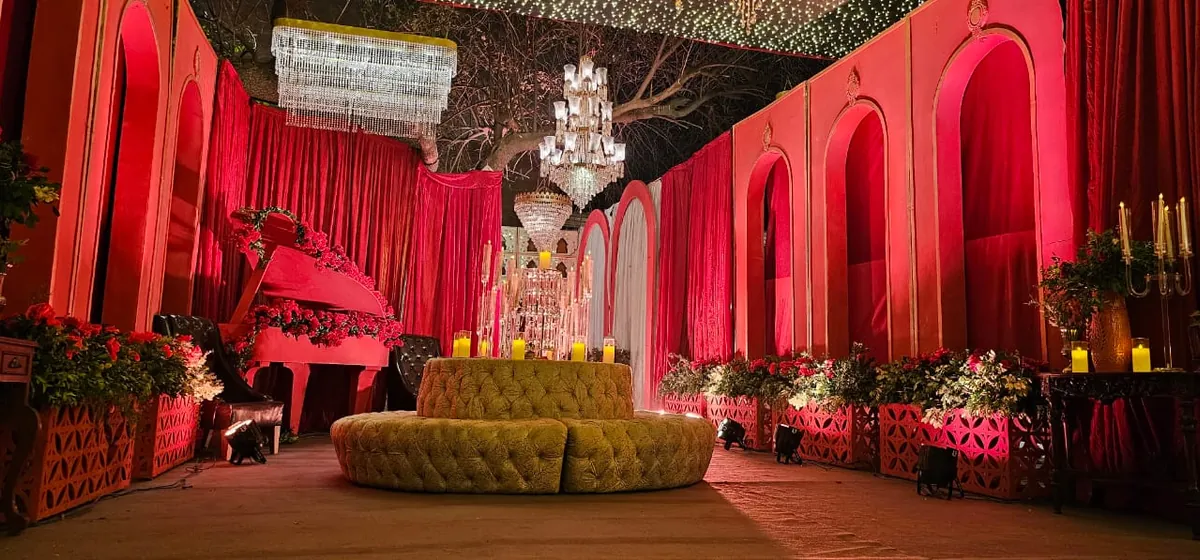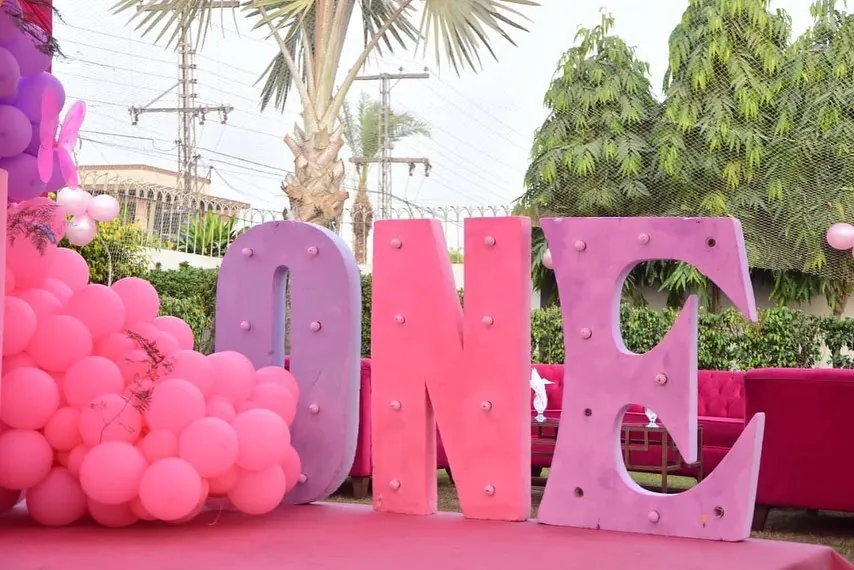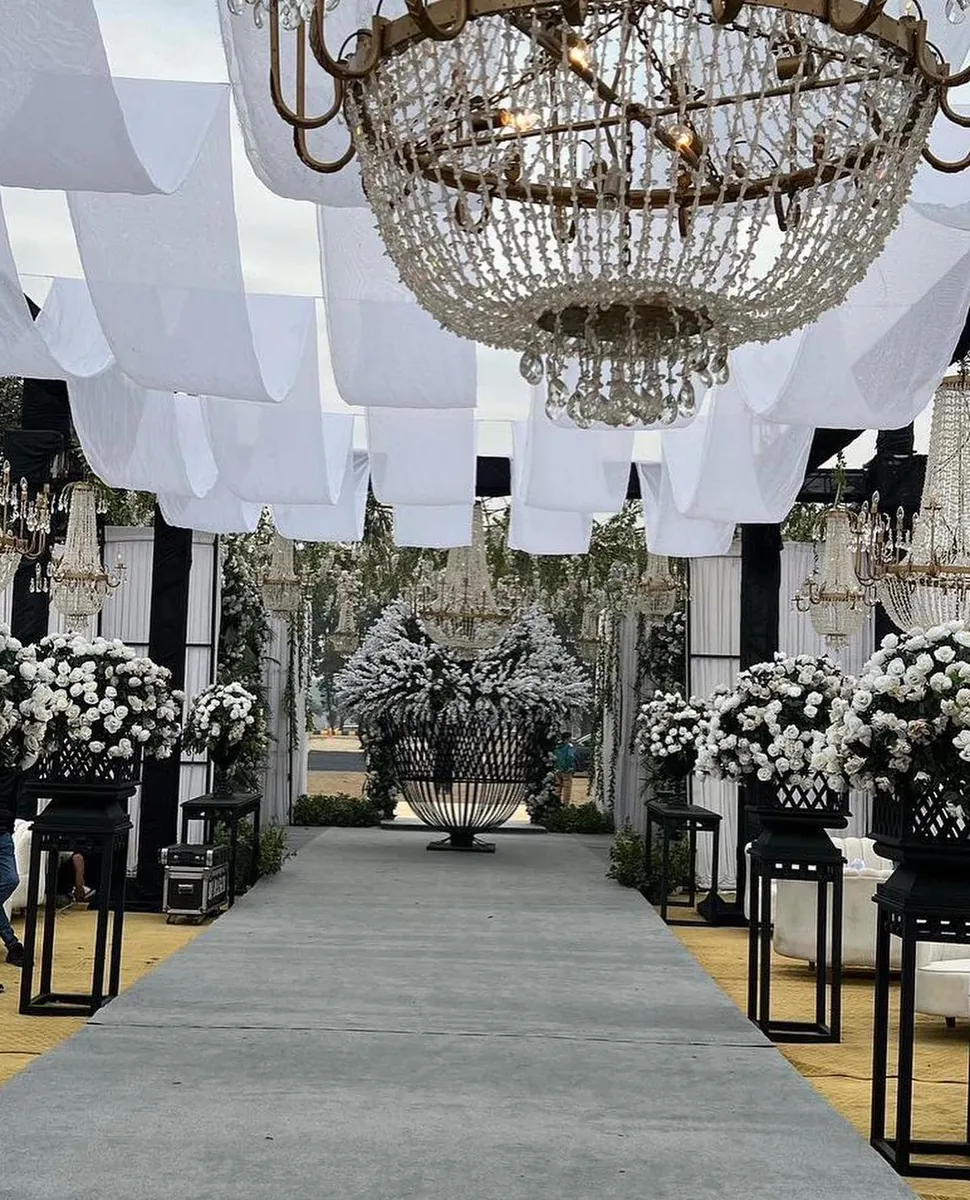
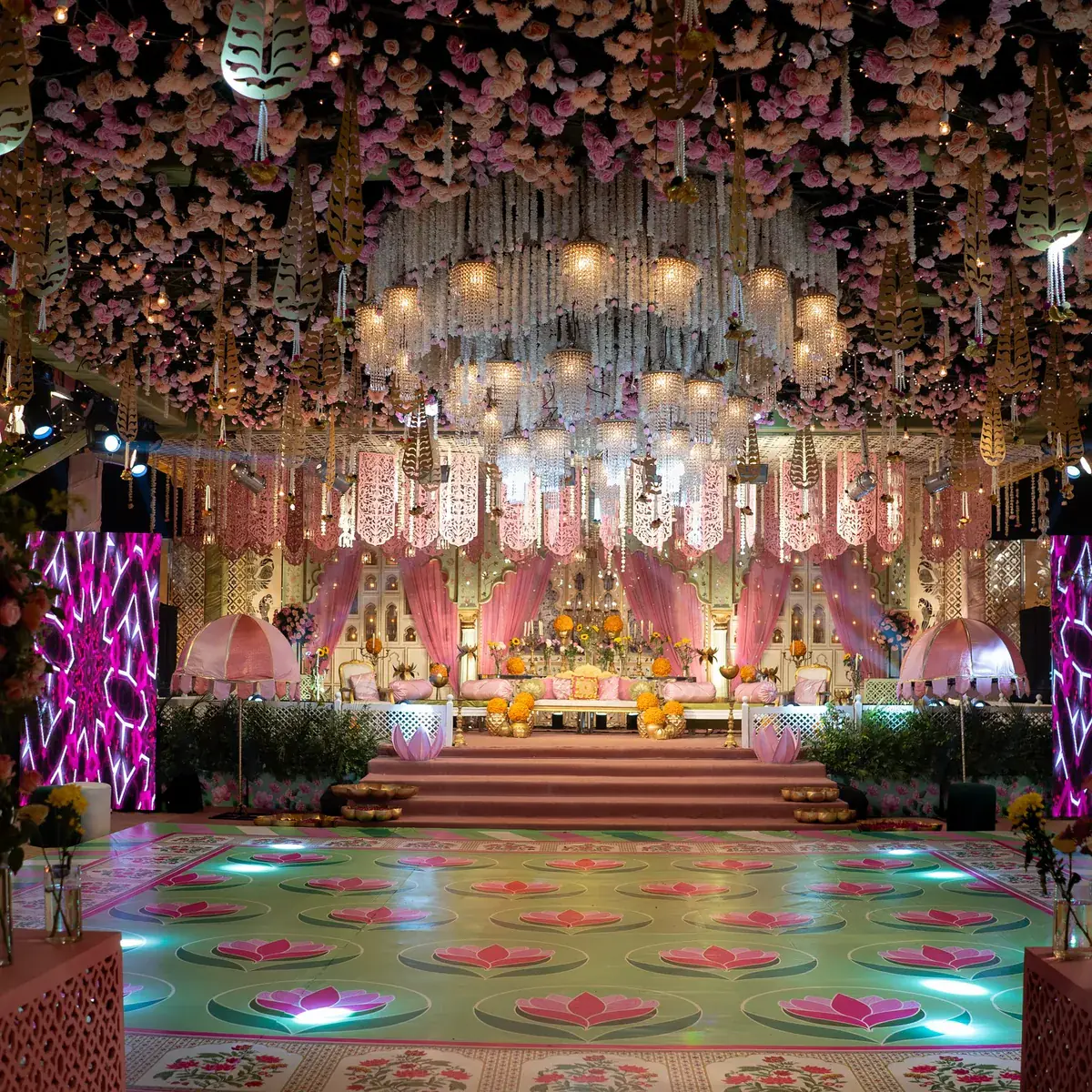
A full Pakistani wedding is not one event with several parts — it is four separate productions, each with its own vendors, decor and mood, run inside a single week. The hardest part of planning one is rarely any individual function; it is the sequencing, and the handoffs between nights that get missed when each function is planned in isolation.
Twelve months out: lock the skeleton first
Set dates for every function together — mehndi, baraat and nikkah, walima, and any separate dholki or nikkah-only night — before booking any single venue. Families who lock the baraat date first and then scramble to fit a walima hall around it routinely end up with a longer, more expensive gap between functions than planned.
The typical week
The most common Lahore sequence runs mehndi two to three days before the baraat, nikkah either on the baraat night itself or a day or two earlier in a smaller ceremony, and the walima one to two days after the baraat — enough time for the family to recover and the venue to reset, not so much that momentum is lost.
Mehndi night
The least formal and most physically active function — dancing, dholki, bright colour — typically starting in the early evening and, at a hall or other hired venue, still finishing by the venue’s closing time. Because it is the loosest night on the calendar, it is also where run-of-show discipline slips first; a mehndi that runs ninety minutes long pushes every vendor call time behind it for the rest of the week. Settle the mehndi night staging, lighting and running order well before the date, not on the night itself.
Baraat and nikkah
The groom’s procession and the ceremony itself are the emotional peak of the week, and timing the arrival correctly — after golden hour, before dinner impatience sets in — matters more here than on any other night.
Related: The Perfect Baraat: Timing, Dhol and the Grand Entrance
Walima
The closing night, hosted by the groom’s family and usually the most formally photographed — it earns its own guest list, its own decor identity and its own run of show rather than inheriting whatever is left over from the baraat.
Related: How to Plan a Walima Reception in Lahore
Work backwards from the venue’s closing time
Before you fix any start time, find out when the venue has to be empty. Under section 6 of the Punjab Marriage Functions Act 2016, whoever owns, manages or runs a public place that is the site of a marriage must ensure every ceremony connected with it concludes by 10:00 pm. The Act counts mayun, mehndi, barat, nikah, rukhsati and walima as part of a marriage, and its definition of a public place includes a wedding hall, hotel, restaurant, open space or private property hired for a marriage.
Operating-hour notifications and enforcement point the same way. Dunya News reported in June 2026 that a Punjab notification allows wedding halls, marquees and other commercial event venues to stay open until 10 pm, and Dawn reported in October 2025 that Lahore’s district administration had sealed marriage halls, a farmhouse among them, for running functions past the permitted time. Notifications get revised, so confirm in writing, with your venue, the closing time that applies to your date.
In practice, each function at a hall has a hard end, and the evening has to be built back from it. If the hall closes at 10:00 pm and a baraat arrives at 8:00 pm, for example, the nikkah, dinner, speeches and any same-night rukhsati must fit into those two hours. Put clock times against each moment, decide in advance what can be shortened, and give one person the job of calling time. The Act’s 10 pm duty is written for public places, and whether it reaches a function on a family’s own property is not something to assume; section 3 also bars causing nuisance or disturbance to the neighbourhood beyond reasonable celebrations. Ask the local administration before planning a late night at home.
Related: Rukhsati Planning in Lahore: Timing, Staging and What to Expect
Where timelines actually break
Almost never on the night itself — usually in the gaps. Vendor changeover time between back-to-back functions at the same venue, family exhaustion by the third night in a row, and Lahore’s weather (heat from April through September, fog and cold snaps in December and January) are the three factors that wreck an otherwise well-planned week. Build slack into the schedule for all three, not just the headline events.
Treated as one coordinated production instead of four separate bookings, a multi-function Pakistani wedding runs the way it is meant to — as a single story told across a week, not four unrelated events that happen to share a couple.
Related: Wedding Planning & Management in Lahore · How to Choose a Wedding Planner in Lahore
Our service: Wedding Planning & Management in Lahore
Planning something extraordinary?
Book a complimentary consultation with our atelier in Gulberg — we'll bring the venue intelligence, you bring the vision.