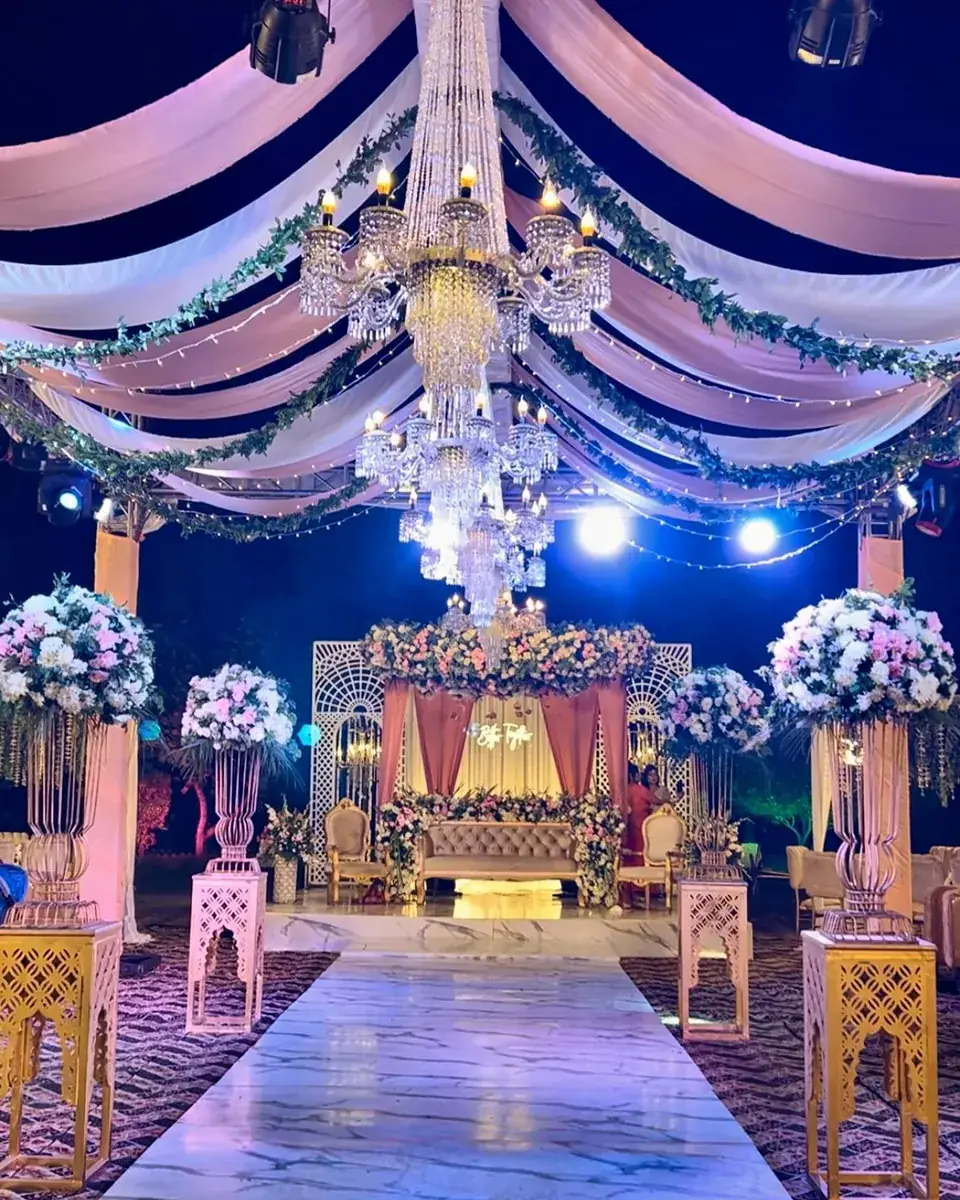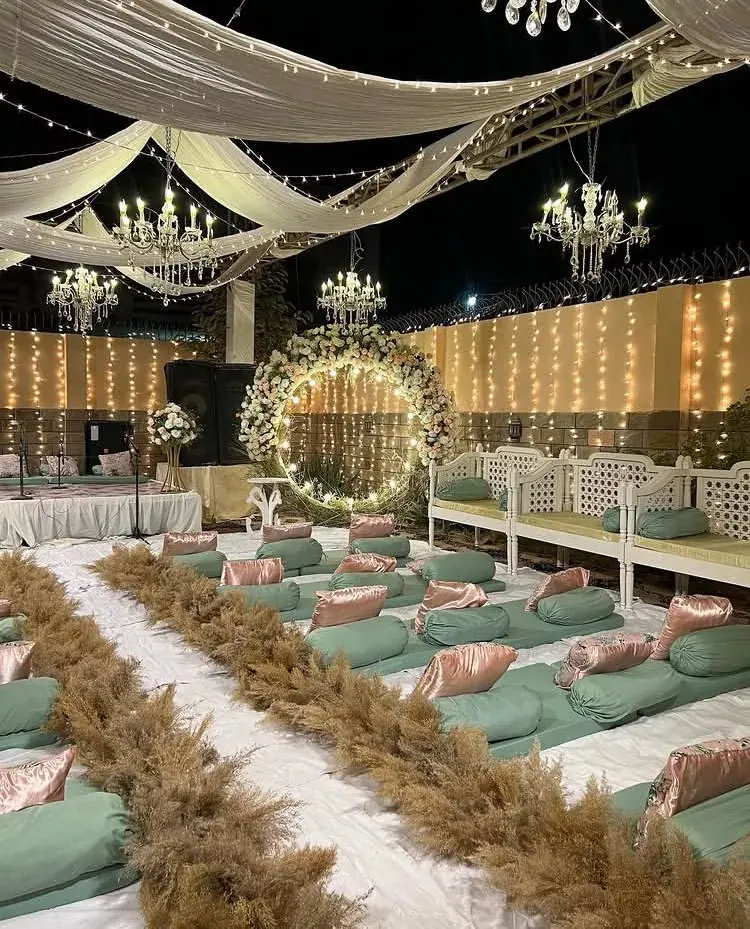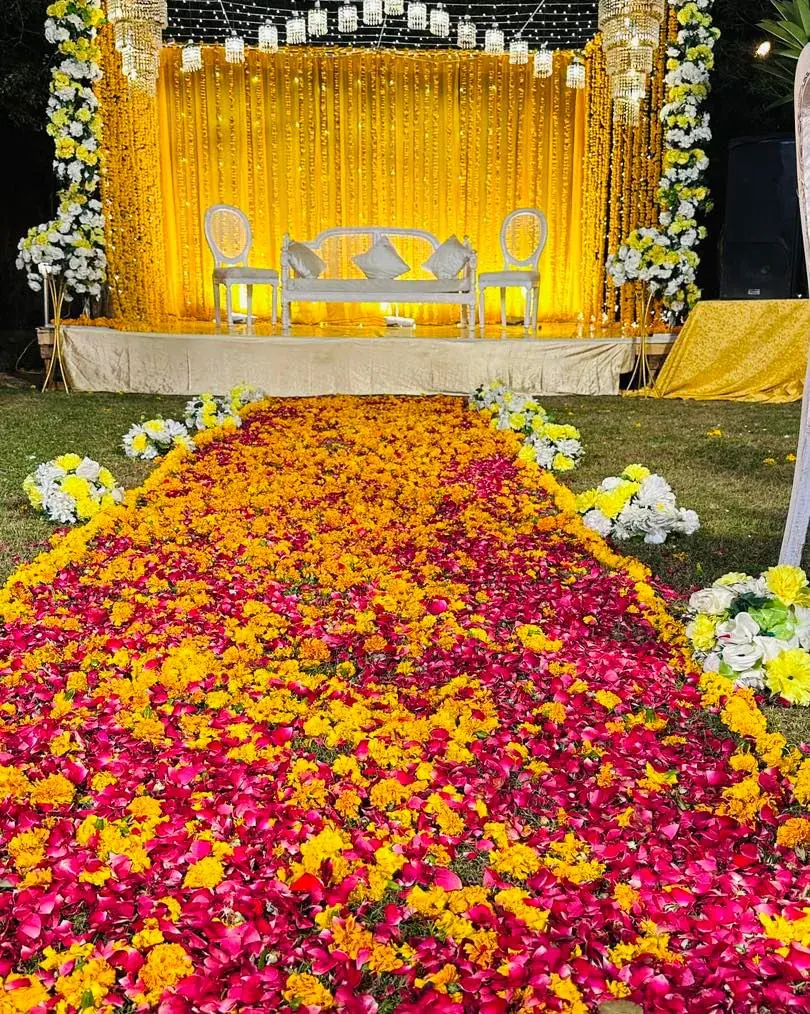
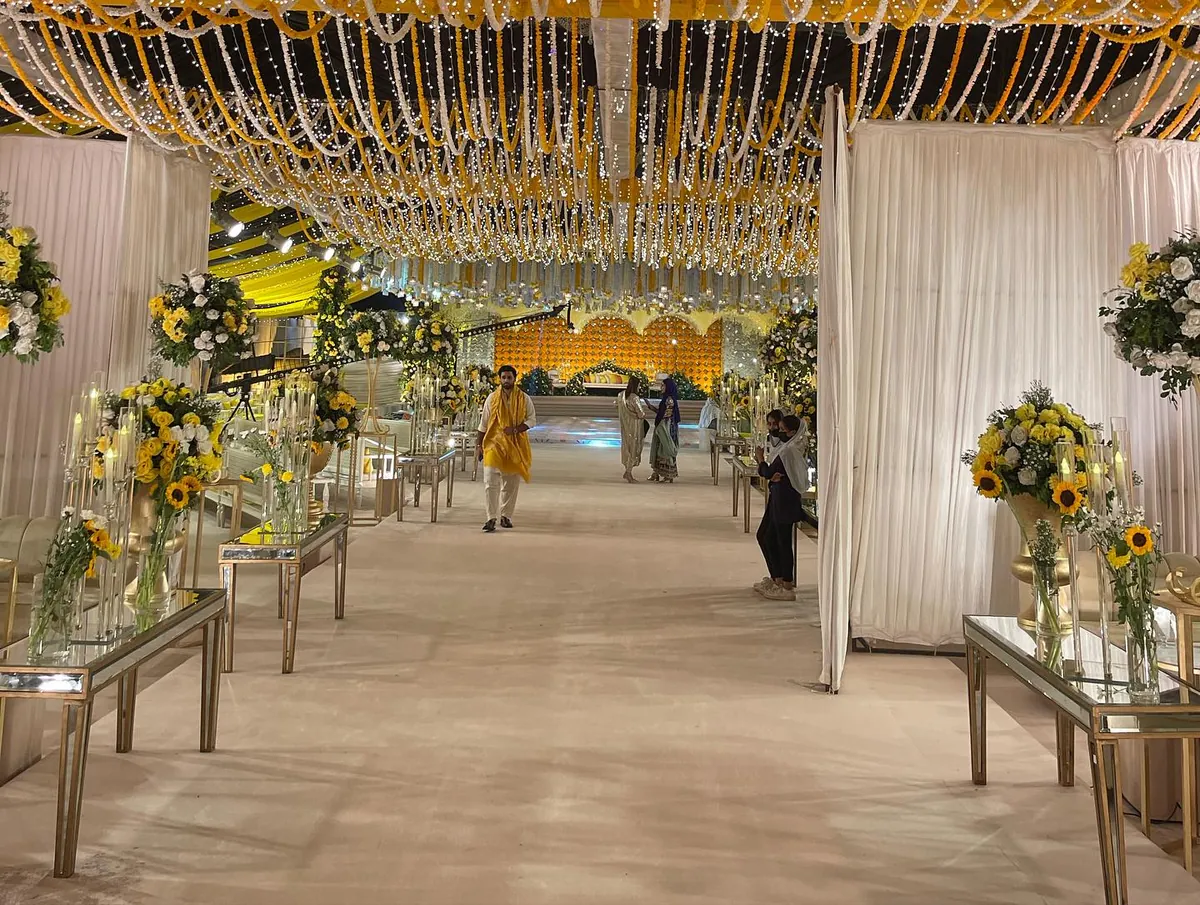
The baraat (also written barat) is the function most likely to run behind schedule if it isn’t planned properly — the groom’s route, the dhol formation and guest parking all have to be timed together. We coordinate the arrival so it becomes the entrance it is supposed to be, not a scramble at the gate.
Groom’s Arrival Timing & Route
A planned arrival time and route worked backward from when the nikkah or walima needs to begin.
Dhol & Procession Coordination
Dhol groups and the procession formation coordinated so the entrance reads as one sequence, not a crowd.
Guest & Parking Logistics
Parking and guest arrival planned separately from the baraat route, so the two don’t collide at the venue entrance.
Handoff into Nikkah or Walima Staging
A direct handoff from the baraat’s arrival into the next function’s run-of-show, without a dead gap in between.
Baraat Entry Styles and What Each One Needs
A car entry is the simplest and needs a clear drop point and a held route. A dhol-led walk-in is the most atmospheric and needs a corridor that guests are not already standing in. Horse or vintage-car entries need space to manoeuvre and a handler who has seen the venue. Cold pyro and sparkler entries need the venue permission confirmed in writing and clearance from any fabric or drape. Each is a different logistics problem dressed as the same thirty seconds of video.
The Milni and the Handover Between Families
The milni is where baraats most often lose fifteen minutes. It works when both families know in advance who is being introduced to whom and in what order, and when someone is holding that list on the day. We agree the pairs beforehand and keep the sequence moving, so the greeting stays warm rather than turning into a queue.
Traffic, Timing and the Lahore Reality
A baraat route through Lahore at evening peak is not the route it is at midday. We plan the departure time against real traffic on that corridor rather than against map estimates, and we keep a second route ready. The most common cause of a late baraat is not the family being slow; it is a route nobody drove in advance at the same hour.
What Baraat Planning Costs
The baraat is usually a smaller decor spend than mehndi or walima, because most of the budget goes into the entrance and the arrival rather than into a room. Where it rises is with a horse, vintage car, cold pyro or a large dhol group, each of which is a discrete line rather than part of a decor package.
Frequently Asked Questions
What time should a baraat typically arrive?
It depends on whether a nikkah or walima follows, but we generally plan the arrival with at least 30–45 minutes of buffer before the next function starts.
Do you coordinate the dhol group?
Yes, we brief and coordinate the dhol group’s timing and positioning as part of the procession plan.
How do you handle parking for a large baraat?
We plan guest parking and the baraat route as two separate flows so arriving guests aren’t stuck behind the procession.
How much does baraat planning cost in Lahore?
It is generally lighter on decor than the other functions, with cost concentrated in the entrance. Horses, vintage cars, cold pyro and larger dhol groups are quoted individually rather than bundled.
Do we need permission for a sparkler or cold-pyro entry?
Yes, from the venue, and we confirm it in writing before it is planned in. It also has to be cleared of drape and any fabric staging, which is a decor decision as much as a safety one.
How long does the baraat entry actually take?
The entry itself is a few minutes. Realistically, from the baraat arriving at the venue to everyone being seated, allow thirty to forty-five minutes including the milni and photography.
Related: The perfect baraat: timing, dhol and the grand entrance · Wedding event timeline: mehndi to walima · Rukhsati planning: timing, staging and what to expect
Planning your baraat?
Book a complimentary consultation with our atelier in Gulberg, or reach us directly for a quote.